Lodge vs Outpost Trips - the big picture
A full-service lodge is a hospitality experience: you fly in, move into comfortable rooms, eat served meals, get guided boat time, and return each evening to a staffed facility. Everything is managed for you.
An outpost camp (outpost or remote cabin) is a do-it-yourself wilderness escape: you get a cabin, boats and motors, basic supplies, and privacy — but you run the trip. The tradeoff is more solitude and lower per-person cost (generally), for much more responsibility.
Key differences
Who does the work
- Lodge: guides run fishing excursions, cooks prepare meals, dock staff take care of your boat and motor, and housekeepers take care of your cabin.
- Outpost: your group does navigation, fishing decisions, cooking, cleaning, and maintenance.
Skill level required
- Lodge: great for beginners and first-timers. Guides handle the boat, put you on fish, and teach local waters and techniques.
- Outpost: suited to experienced anglers comfortable running boats, reading maps, and handling minor mechanical issues.
Comfort & amenities
- Lodge: private or semi-private rooms/cabins, full indoor plumbing, drinking water, hot showers, laundry, dining hall, communal rec areas, often WiFi/cell service.
- Outpost: rustic cabins — bunks, wood/propane heat, basic kitchen, basic indoor plumbing, filter your drinking water, often an outhouse, sometimes WiFi.
Logistics & support
- Lodge: transfers, tackle, advice, emergency help, and itineraries handled by staff.
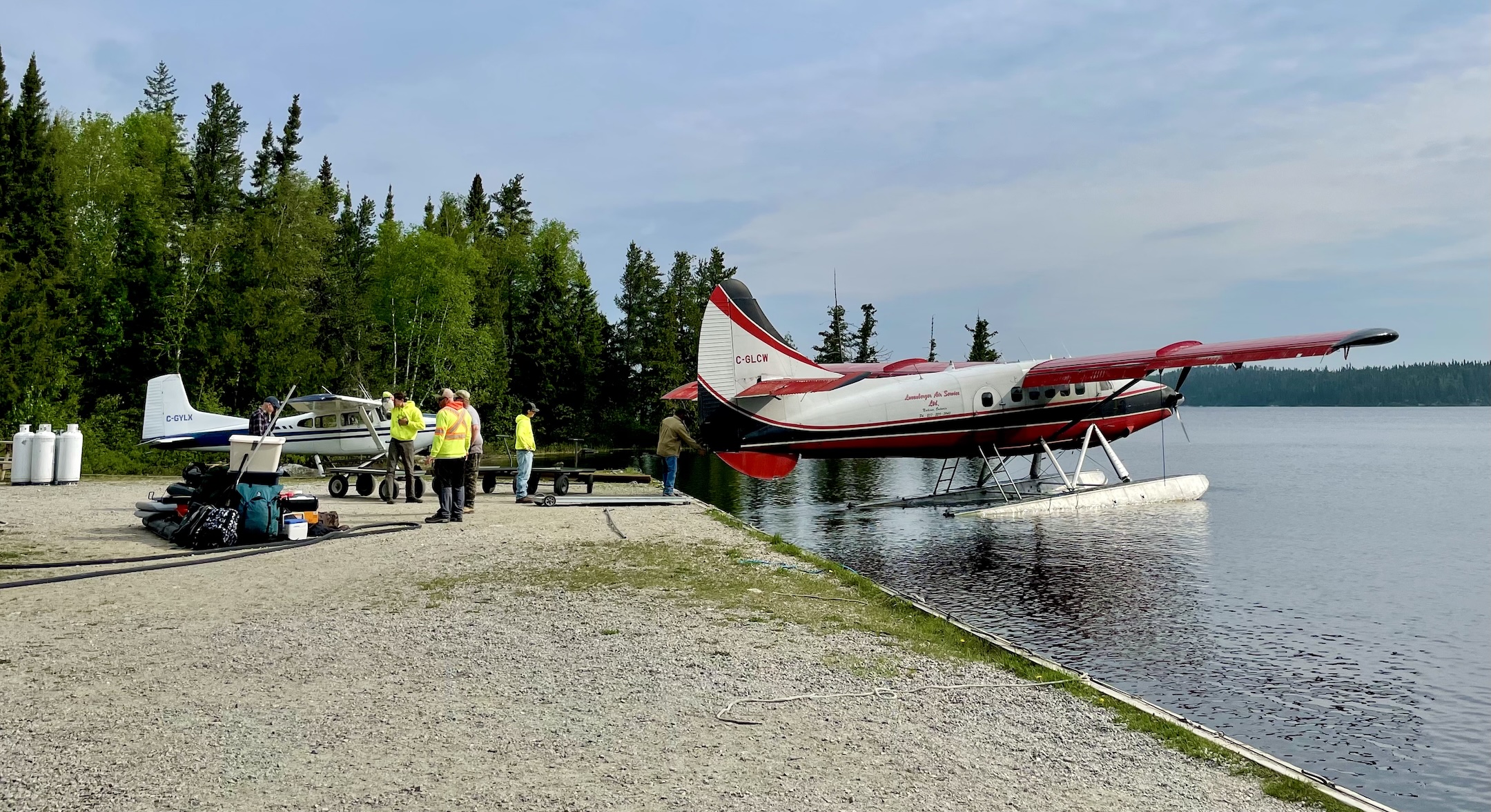
- Outpost: you are responsible for fuel management, route planning, and logistics; emergency response is slower and usually via the outfitter’s float plane.
Guiding & learning
- Lodge: guided trips included or available — excellent for skill building.
- Outpost: minimal or optional guiding — great if you want to practice and experiment on your own.
Privacy & pace
- Lodge: social; meals and evenings are shared with other guests.
- Outpost: private to your group; you control the schedule and noise level.
Cost structure
- Lodge: higher upfront cost and additional hidden expenses: food/drinks, guides, staff tips, etc.
- Outpost: base price is considerably lower, and there are fewer hidden costs to consider
Day-to-day: what to expect
Typical lodge day
- Early wake-up, breakfast served.
- Board guide’s boat and fish 4–8 hours with guide handling navigation and landing fish.
- Fish cleaned and shore lunch prepared by guide.
- Evening: fish cleaned for you, dinner in the lodge, swap stories, relax, prep for next day.
Typical outpost day
- You decide wake-up time; cook breakfast in the cabin.
- Launch your own boat, run to chosen spots, move between spots as a group.
- Stop for a shore lunch you prepare, try new spots or a new lake in the afternoon.
- Return to cabin; clean your fish, cook dinner, check motors and fuel, prepare everything for the next day.
Pros & cons: at a glance
Full-service lodge
Pros:
- Zero-stress travel and planning
- Professional guides increase catch rate and share local knowledge
- Comfortable lodging and meals
- Faster help in emergencies
Cons:
- Less privacy and flexibility
- Higher price
- Schedule may be set by lodge
Outpost camp
Pros:
- Total privacy and autonomy
- Ability to fish your own schedule and explore remote waters
- Deeper wilderness experience
Cons:
- More responsibility and planning required
- Fewer creature comforts
- Emergency response is slower; requires contingency planning
Search Blog